Showing posts with label urban planning. Show all posts

Monday, July 10, 2023

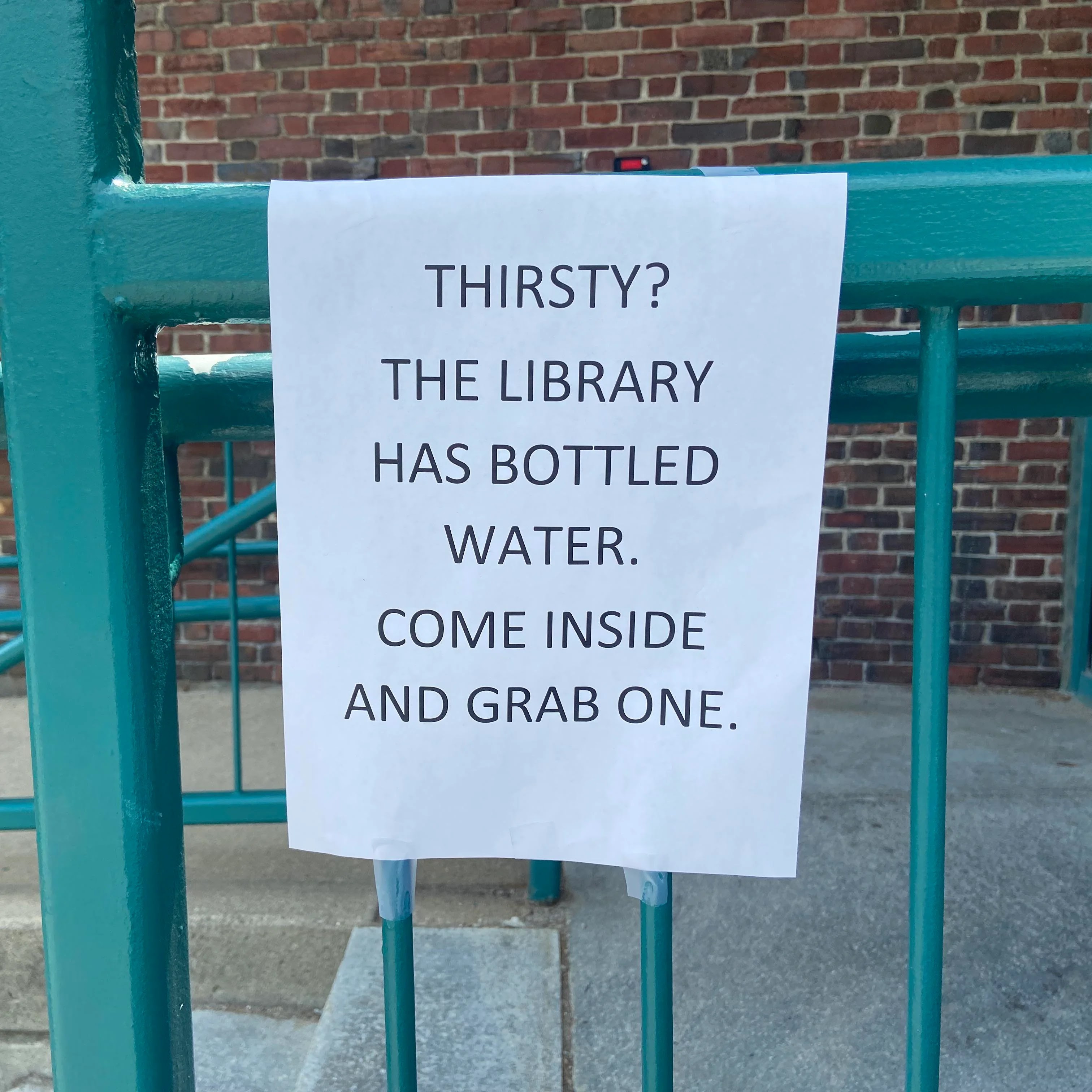
Save a Life. Open a library.

In his book Heat Wave: A Social Autopsy of Disaster in Chicago, Eric Klinenberg found that having social infrastructure in place was a life-saving mitigation, lowering the risk of death by 80 percent in the heat wave of 1995, the equivalent of having an air conditioner versus not having one. 

In the US, heat kills more Americans than any other weather-related disaster, and the climate crisis has been making these extreme events more deadly. Heat deaths have outpaced hurricane deaths in the country by more than 8-to-1 over the past decade, according to data tracked by the National Weather Service.

The evidence shows that social infrastructure is the most relevant and effective population-wide solution politicians can make. When social infrastructure intersects, such as with public libraries and public transportation, the effects are synergistic.

Public policy can improve lives, and evidence increasingly shows that public policy can save lives. It's time politicians declared a state of emergency and marshalled their policies to create, expand, and maintain as robust a social infrastructure as possible. 

Thursday, April 20, 2017

Florida reconsiders the value of catering to the CreativeClass

Food for thought. Do you think any particular group should be catered to or targeted for attraction by urban planners? What are the issues of justice and equality that surround such an approach?

Wednesday, April 19, 2017

The United States of America -- TM

Presentations of Los Angeles and Las Vegas often render a singular space, cohesive in its reality and interactions. This is far from the case, and in showing a single narrative experience, the representations of these cities obscure their urban complexities and the many-faceted realities of their residents. In a bit of irony, it is the revela which obscures.
This obfuscation is not required, by any means. Representations of New York, the most ethnically diverse city in the nation by proportions, frequently demonstrates the many New Yorks and the diversity of the city, not only by race but also by a resident’s access to power, authority and identity within the socioeconomic and sociopolitical structures of the city.
So why the need to claim a single LA? It is the need to authoritatively claim what Los Angeles or Las Vegas is and is permitted to be that drives this single-focused view and rendering of the city. The increasing segmentation and stratification of access to physical space and the disappearance of public space altogether illustrates a desire for uniform, privatized participation by those who belong. Residents of the west coast seem alternately accepting and powerless over this prescription of residential reality as safety pressures are increasingly cited as justification to circumvent and surrender basic liberties, including walking in space.
The idea of plazas and parks being private property, requiring permission for use and enforced by civil code and public officers shows the segmentation of the city by the city for private interest. When city ordinance makes play subversive, what sort of reality is allowed? Who benefits? When the public code serves private interest, it isn’t hard to imagine a world that belongs in a future-gone-wrong movie such as Bladerunner, one with corporate pass cards and chasms of inequality, springing up easily and organically from such underpinnings.

New York certainly has crime and gang issues too. It doesn’t surrender personal liberty and whole swaths of public mobility as a way to address social problems. This approach manifests a dystopian reality  in the streets and in our lives: the corporatization of the United States. Once the land of plenty for all, a beacon of opportunity and equality, the American Dream now has corporate sponsors, a soundtrack, and an access code.

Monday, April 3, 2017

Unequal Planning?

This week I was driving down the newly renovated 10th street and noticed that while it is certainly going to be smoother and the sidewalks are a nice addition, it's sad that this section of Roanoke will not be afforded with tree-lined streets or lampposts -- the curb area beside the sidewalk simply isn't large enough to accommodate that.

The city is making some serious value statements here, and I'm not really a fan of what they are saying with my tax dollars.

Sunday, April 2, 2017

Asheville -- Even if you don't love it, it's great.

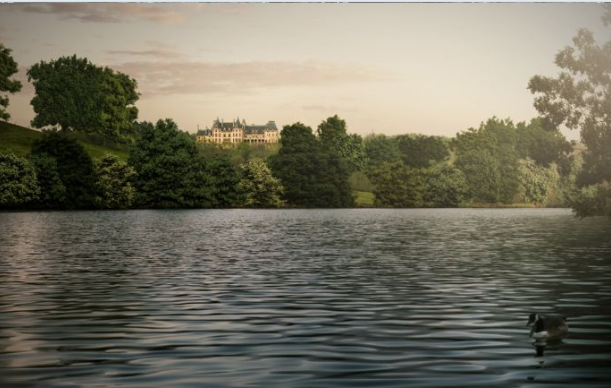
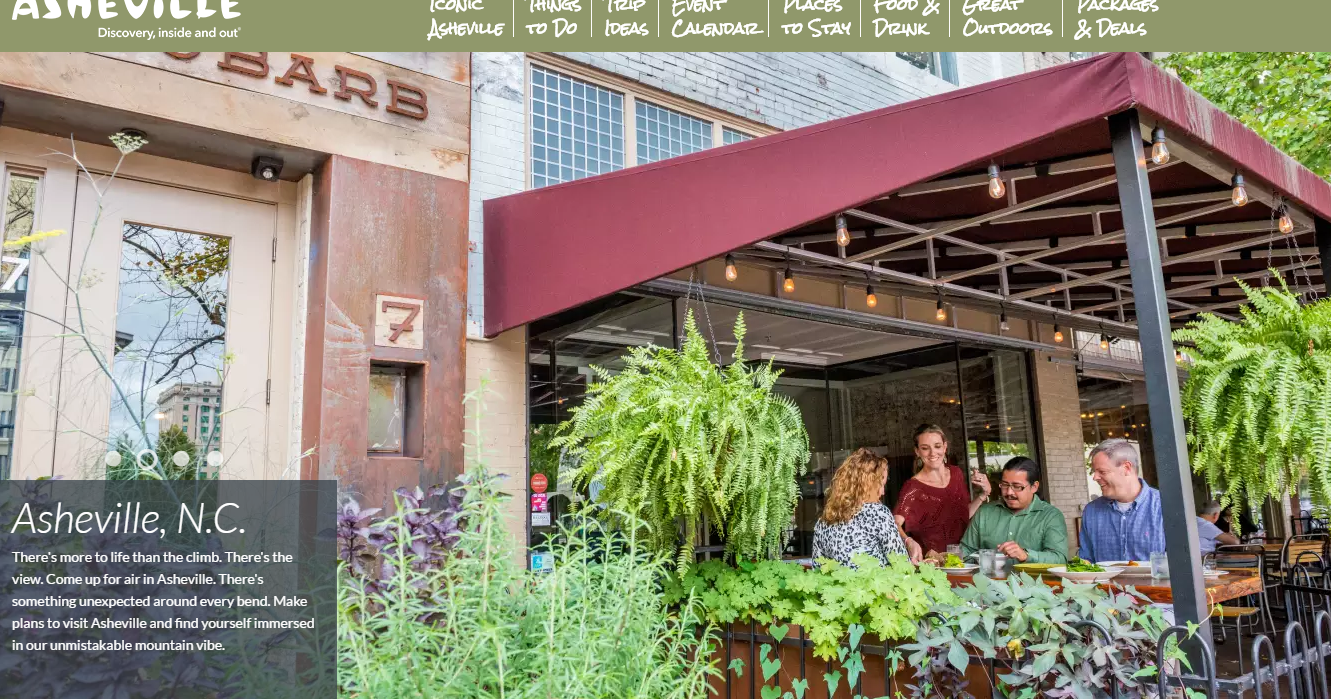
When we talk about placemaking and deliberate branding in the New South, I automatically always think of Asheville. I know Nashville and Atlanta have their own narratives, and bully for them, but Asheville started to shout its narrative to a bigger audience over forty years ago. Not content to be a sleepy gem with a mansion, Asheville tourism decided to set itself apart as a destination.
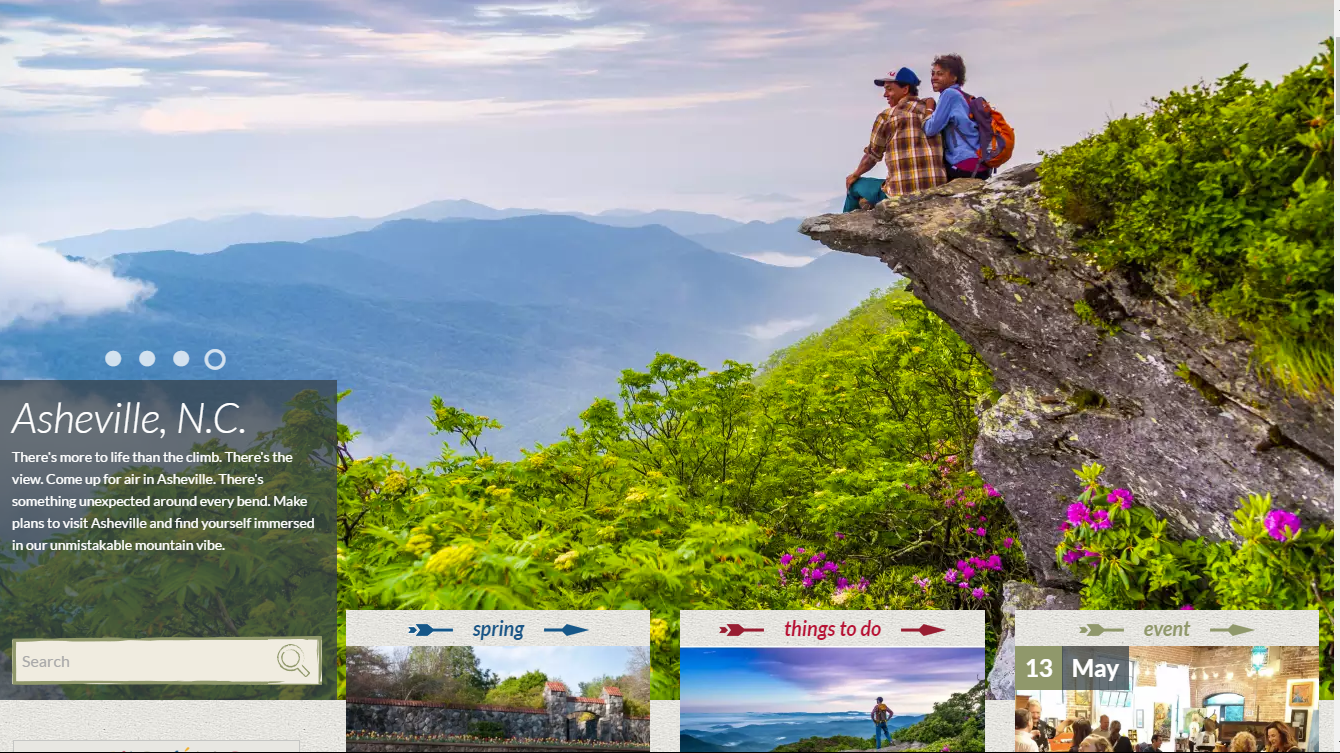
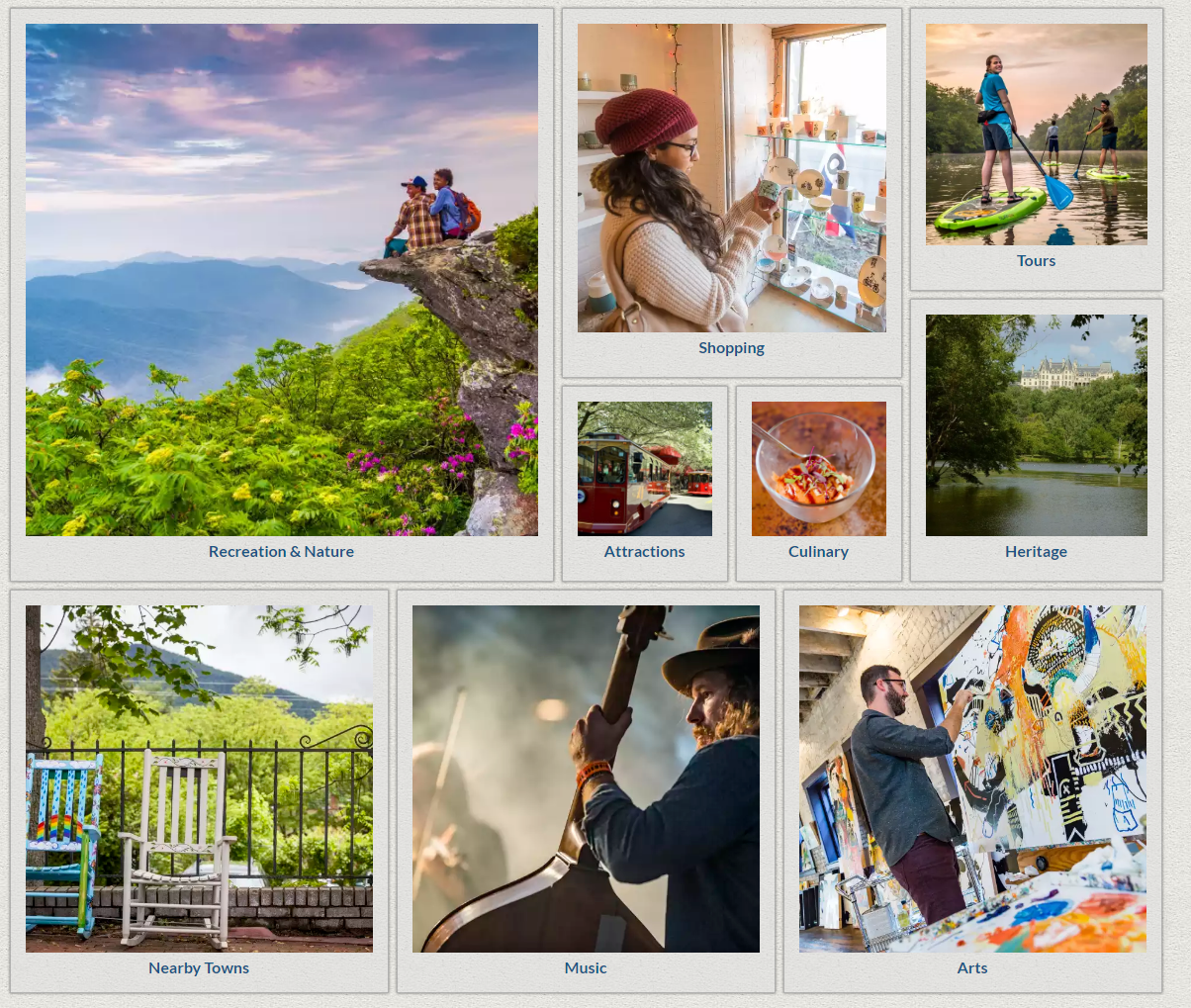
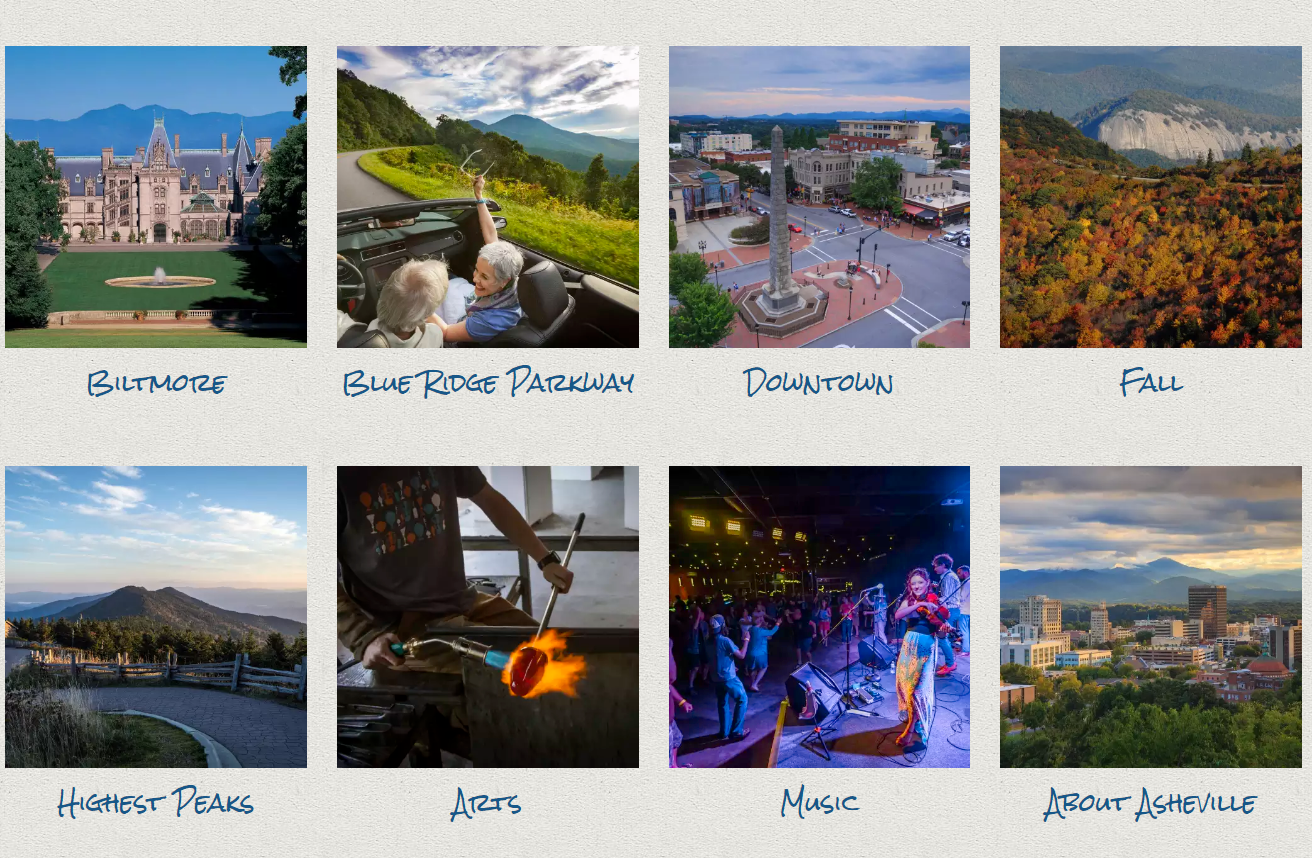
The town highlighted the mountains and the mountain traditions, elevating the idea of traditional music, turning old-way artists into artisans and highlighting hiking their particular section of the Appalachian Trail as a not-to-be-missed experience. The message and the marketing highlight what is unique and iconic about the town.
Asheville sticks with what it has, and applies the idea of Asheville to everything, indiscriminately. This brand integration allows it a wide latitude for application as  Asheville keeps the conversation about its personality. Leaving the elements of activities and the place itself as window dressing, the message that We Are Interesting comes through loud and clear. With this focus on its character, Asheville is able to nimbly incorporate elements as they come and go, from music festivals to craft breweries. This is a message that is elastic enough to incorporate trends without breaking its mold. When I look at the way in which Asheville invites others to come experience the town as opposed to merely visit, I see a marked difference between this narrative and much of what seems a mad grab for additional hodgepodge entertainment elements, such as Las Vegas adding an NFL team to the list of things you can do in Vegas (and then never speak of again -- let me tell you, I’m already seeing the “What happens in Vegas stays in Vegas” football weekends and sportscaster references, each more groan-inducing than the last).
Asheville’s regeneration narrative redefined more than its town; the branding initiative undertaken by Asheville really grabbed and redefined mountain culture. Before Asheville, our national understanding of the Appalachian Mountains was unfavorable in the extreme, the butt of horribly insensitive and off-color jokes, most of which involved incest. While West Virginia is still seen in this way, Asheville has highlighted itself as so traditional as to be hip and worth the trip
Asheville’s marketing and brand is distinctly unapologetic. It’s a town that really likes itself, and it’s okay if you don’t agree. This stance might be the biggest tether back to its roots, a foil against the critics that say that, much like Monterey, California, it is in love with itself enough that no one else needs to be, and that it has lost touch with its authenticity over years of telling us how real it is here. When I think of Asheville’s acceptance of its warts, I am reminded of the I (heart) NY ad campaign. The ultimate effort in branding a city into an icon, this campaign never said “I’m sorry” for what didn’t work about NY, and there was plenty that didn’t back then (and still doesn’t work today). Both marketing campaigns focus on the tangible good elements and shrug off the bad ones with an acceptance that almost makes us more comfortable, as though by accepting the lack of perfection in the town, we can at long last have permission to accept the lack of perfection in ourselves.
Through it all, Asheville clearly tells us that everyone here is free, white and 21. There isn’t much for the less-abled or disenfranchised, and there certainly aren’t any representations of them in the abundant marketing and tourist literature. The white creative class is more the focus for the Asheville web site than ever before. Never forget that Asheville went out of its way to add a craft brewery, decades after it had us all convinced that it had everything it needed.

In fact, there’s a bit of desperation lurking in the wings of the stagecraft. Nonetheless, even though it might have to reboot its regeneration and update its sense of where it ranks in the New Mountain Towns index, Asheville’s branding did a lot of things well, in my opinion, whether we are selling ice cream or insurance.

Tuesday, February 28, 2017

The perils and pitfalls of nostalgia, especially for urban planning

Gentrification is an invasion, an occupation by the middle and upper classes of lower class neighborhoods in a nostalgia-fueled revel to secure the promise that has been the American social narrative for seventy-five years: Carefree living in the cradle of familiarity. The hostile takeover of real estate, especially urban neighborhoods, to craft fantasy into reality has been the aim of those who can afford it at the expense of those who cannot stop it since the turn of the twentieth century.

Nostalgia is dangerous. If for no other reason than it takes our focus away from the present, it is dangerous to our peace of mind. In its worst forms, it devalues the present in favor of a romanticized version of the past, one that likely never existed and never could, and holds this bit historical romance as the standard against we are all measured and, naturally, found wanting. Nostalgia might seem harmless, endearing, even, but it is an engine of discontent that drives social ills far and wide, and gentrification might be amongst the worst of its crimes.

In the case of urban planning and daily life, nostalgia-through-gentrification assumes that a different time was easier, simpler, safer, and ultimately more carefree. When we look at the ads for planned communities from any era, the halcyon call of fewer cares remains a constant, despite the differences of how we are told that this thriving and serene outcome will be reached.

When Trump comes in talking about “renewal,” he is suffering from his own form of nostalgia, electing not to see or to regard the history of what the underclass and disenfranchised, Black more often than not, in America have suffered in the quest for “renewal.” Urban planners and Trump advisers alike would do well to acquaint themselves of the history of renewal in the United States as the upper echelons of society have made it highly lucrative for developers to spin their tales of foursquare and loft bastions of golden contentment. As a society, we regard ourselves as rugged individualists, possessed of an enterprising and scrappy spirit forged on the advancing lines of the American Frontier. We have, especially through the twentieth century, prided ourselves on our ability to succeed in competition, personally and professionally. And yet, we seem to crave the opposite of competition in our home lives, a garden of tranquility in which effort is rendered nearly irrelevant, a place where we are, at long last, content.

The history of urban renewal in the United States is on of state-sanctioned land-grabbing for the upper classes for the profit of developers at the forcible displacement of the lower middle and poor classes who already live in these areas, typically without beautification and community services that will be brought in to justify and attract those who can afford the upscale price tag for areas that were once avoided by walkers and drivers alike.

Public transit, for example, is free and plentiful all day downtown courtesy of the Star Trolley -- a nod to the intersection of of nostalgia and branding -- which runs at every stop no less than every 15 minutes. The working population it serves are predominantly upper middle class medical staff, legal staff, or other professional and executive workers. Meanwhile, in neighborhoods where residents are less likely to own a care, transportation is less available, expensive, and fraught with negotiations from pass purchase to routes and schedules, to say nothing of the crime level in these districts. These folks, often described as “less decent,” are seen as not able, willing or interested in making use of community services, even if they were available. Such an attitude, held by otherwise care and intelligent people, persists even in the most liberal camps. The social gospel continues to inform and shape our feelings about the poor as a nation.

One of the things I find ironic about the urban planning and development efforts in Roanoke is that it is gentrification that spurs the city to increase and improve community services, from the condition of the sidewalks to the complete renovation of a library for residents who, now that gentrification has taken place, only walk for leisure (as opposed to a method of transit to schools and work) and who are more likely to use the library as a place to get a coffee and sit to read their latest kindle purchases. The residents who would have used the parks, sidewalks and services to materially increase their quality of life are no longer able to afford the rent.

And speaking of rent, there is one thing that has changed in the thirty years since Hamnet wrote. These days, there is no longer a “tenure transition from renting to owning.” The social elite are, more than ever, willing to think of themselves as competent while offloading the responsibilities of life and ownership to staff, typically referred to as management. In the Riverhouse, an exemplary development effort of taking a disused, abandoned building of bygone industry, whose parking lot was used more for drug trade than for anything else, the rental includes the super high-speed internet we cannot live without these days, and building management extends to changing a light bulb for residents if you call (they will do it that day for $10, and no, residents aren’t allowed to do it themselves). We no longer cook our own food, preferring to let others make choices for us, and highlighting this way of life as somehow more simple, possessed of a purity that is desirable.

Yoga retreats bring us the mindless side of mindfulness, promising an idyllic weekend, week or month, while we are in charge of nothing more difficult than showing up through the day-long offerings of bliss. If we are truly to be mindful, we must own our lives and our existences, and the consequences we enact when we buy, rent, or use anything, from land to water to clothing. This is a challenge, not only for urban planners who want to provide the best for their residents in an increasingly-intense environment of municipal competition, but also for us as individuals, occupying a stream of stimulation and distraction that seems to grow exponentially each year.