Showing posts with label inequality. Show all posts
Showing posts with label inequality. Show all posts
Sunday, August 27, 2017

Wednesday, April 19, 2017
The United States of America -- TM
Presentations of Los Angeles and Las Vegas often render a singular space, cohesive in its reality and interactions. This is far from the case, and in showing a single narrative experience, the representations of these cities obscure their urban complexities and the many-faceted realities of their residents. In a bit of irony, it is the revela which obscures.
This obfuscation is not required, by any means. Representations of New York, the most ethnically diverse city in the nation by proportions, frequently demonstrates the many New Yorks and the diversity of the city, not only by race but also by a resident’s access to power, authority and identity within the socioeconomic and sociopolitical structures of the city.
So why the need to claim a single LA? It is the need to authoritatively claim what Los Angeles or Las Vegas is and is permitted to be that drives this single-focused view and rendering of the city. The increasing segmentation and stratification of access to physical space and the disappearance of public space altogether illustrates a desire for uniform, privatized participation by those who belong. Residents of the west coast seem alternately accepting and powerless over this prescription of residential reality as safety pressures are increasingly cited as justification to circumvent and surrender basic liberties, including walking in space.
The idea of plazas and parks being private property, requiring permission for use and enforced by civil code and public officers shows the segmentation of the city by the city for private interest. When city ordinance makes play subversive, what sort of reality is allowed? Who benefits? When the public code serves private interest, it isn’t hard to imagine a world that belongs in a future-gone-wrong movie such as Bladerunner, one with corporate pass cards and chasms of inequality, springing up easily and organically from such underpinnings.
New York certainly has crime and gang issues too. It doesn’t surrender personal liberty and whole swaths of public mobility as a way to address social problems. This approach manifests a dystopian reality in the streets and in our lives: the corporatization of the United States. Once the land of plenty for all, a beacon of opportunity and equality, the American Dream now has corporate sponsors, a soundtrack, and an access code.
see others about:
geography,
inequality,
Las Vegas,
Los Angeles,
place making,
place narrative,
urban planning

Thursday, April 13, 2017
Change Agents and the City
While reading the articles for this week, I was struck by how the Apartheid City structure reflects Roanoke’s geographic and zoning de facto barriers that have been used for voluntary and involuntary racism and spatial clustering. Roanoke’s development continues to take into account and cater to the Creative Class and the Young Urban Professional -- while these are not exclusively Caucasian or any race or even nationality in particular, the Carilion Cadence is the beat of this city’s heart more often than not. To date, that has involved development for the attraction of well-educated medical and creative staff, many of them young, able bodied, and childless, more interested in running the greenway near the pub and shopping a farmer’s market near the loft building than addressing needs of native residents’ lack of access to transportation, food, or equal educational offerings.
To be physically separated is demoralizing; it is a public stamp of approval of different social realities for different folks, of non-belonging and of exclusion. The conditions of exclusion were deemed so offensive and antithetic to the ideals of the United States that they were deemed unconstitutional by the Supreme Court in 1954 when the Brown vs. the Board of Education case resulted in the ruling that “separate but equal is not equal.” Certainly such stratification and the systemic neglect and violence that go with it seem in direct conflict with the United Nations’ call for “A dignified and secure existence in cities.”
Anderson writes that “Simply living in such an environment places young people at special risk of falling victim to aggressive behavior.” When we look at the decisions made by Roanoke and so many others cities all over the country, the efforts to revitalize urban spaces seems fraught with tension, especially as urban planners work with politicians and existing businesses to ensure the best economic reality while achieving an orderly and aesthetically pleasing design. the problem seems to lie in the idea that the revitalization is appealing and accessible to everyone equally.
Right now gay is hip, so we are happy to have a Gay Pride parade and Pride in the Park festival. Cities are scrambling to follow Roanoke’s example of celebrated inclusion: we happily have festivals for any culture -- Greek, Lebanese and Local Colors are just a few that come to mind. It’s estimated that Roanoke’s population is growing by one thousand residents a year, many of these newcomers attracted by the open and active image that Roanoke has.
But much of the separateness is still ignored by Roanoke, and we are developing two very different Roanokes indeed, one a poster for inclusion and happiness for mostly-young, moneyed, and able-bodied residents in the south and another for those who support the former -- the disenfranchised, mostly (but far from exclusively) African-American who live in the north.
Folkways bump into and often trump mores all the time, but it’s never more apparent than during interactions at the physical and societal edges of public space, where the spaces are inadequate to hold all our various realities simultaneously, and the differences in our individual expectations for behaviors and consequences becomes manifest. When north meets south in Roanoke, the expectations of behavior, language, dress and redress are evident and ultimately no one feels familiar or comfortable. Oppositional cultures seem at times merely one more part of a social system that is deeply stratified -- unified by twitter feeds and facebook groups and how we consume the stream of information from our social networks. The narratives of these networks can be, and often is, dramatically different at any given time. While Twitter might be flooded with the antics on the senate floor or the big reveal in a netflix show, the same timeline of facebook might be wholly taken up with sports plays or the social issue of welfare and the minimum wage.
As Roanoke reclaims and reinvents space -- from previous industrial sites such as along Salem Avenue to undeveloped sites such as Brandon swamp -- to create gathering, activity and residential space, folkways and our internal programming are ruling our interactions more than ever. I am hopeful that Roanoke will slow down development long enough to start listening to matters of justice as well as matters of paint colors and housing needs and development opportunities. It’s time that we look to other, at times informal ways in which urban problems of inequality and injustice are being dealt with effectively. Not to do so is to actively invite these issues to be addressed informally in ways that have proven not only ineffective, but downright toxic for those they serve.
More than anything, the readings show that availability and quality of services makes a huge difference in residents’ quality of life and peace of mind, the very qualities that Anderson highlights as lacking in the streets, forcing street residents to develop, adopt and enforce a behavioral code to address the feeling o of “alienation from mainstream society and its institutions.” This combines with a “profound” lack of faith to create a pervasive context of hopelessness, the lesser of “two contrasting conceptual categories” whose pressures and consequences extend far beyond geographic borders and economic boundaries. In this reality, one can count solely on oneself and one’s own resources of spirit and attitude, and “physical prowess takes on great significance.” In his analysis, Anderson finds “hopelessness and alienation . . . fuels the violence” that so many cities experience.
In a curious twist of events, surveillance has proven a powerful ally in effecting social change in the last decade. The United States culturally rejects state-sponsored surveillance out of hand, decrying an inalienable right to privacy (while demanding that apple, amazon, facebook, and every other tech giant in the land hand over all data and the codes to hack the system). But self-surveillance has become the lifeblood of the twenty-first century equality and social justice movements, and the state has implemented surveillance measures more out of self preservation than of attempts to effect social control. To be caught on camera -- body cam or cell phone -- is to validated and to be accountable. Through this nationwide citizen-level campaign of Observe & Record, we as a culture of the governors and the governed believe we are finally real, that we have a voice, and that we matter. Surveillance is proving to be the real equalizer, whatever Sam Colt might have led us to believe.
The crime and violence is but a symptom, a harsh reality that residents all over the globe know in their bones and are trying to address. When Mexico attempted to let the residents achieve their own solutions, the reality was that power-grabbing and status building led to the same development stratifications and fragmentations as when the politicians were in charge. Having lost sight of their good-natured beginnings, “community organizations in Mexico City serve largely as Low-income real-estate developers.” Money, politics and a system seem to come together to create their own self-sustaining streams of existence, and seem to be far from David Harvey’s vision that we can “change ourselves by changing the city.”
Ultimately, if we are more interested in self-serving aims -- the bolstering of our own social status or the increase in our personal profits -- we are not going to be able to realize the change we want to see. We must genuinely start acting as though everyone is equal and has the same right to the best social services, from libraries to restaurants to sidewalks and schools. Perhaps the message is to change ourselves to change our cities.
see others about:
change,
equality,
folkways,
gender,
geography,
hopelessness,
inequality,
integration,
justice,
LGBTQ,
mores,
poverty,
respect,
Roanoke,
segregation,
self-improvement,
selfwork,
surveillance,
urbanization
Monday, April 3, 2017
Unequal Planning?
This week I was driving down the newly renovated 10th street and noticed that while it is certainly going to be smoother and the sidewalks are a nice addition, it's sad that this section of Roanoke will not be afforded with tree-lined streets or lampposts -- the curb area beside the sidewalk simply isn't large enough to accommodate that.
The city is making some serious value statements here, and I'm not really a fan of what they are saying with my tax dollars.
The city is making some serious value statements here, and I'm not really a fan of what they are saying with my tax dollars.
see others about:
geography,
inequality,
Roanoke,
urban planning
Sunday, April 2, 2017
Asheville -- Even if you don't love it, it's great.
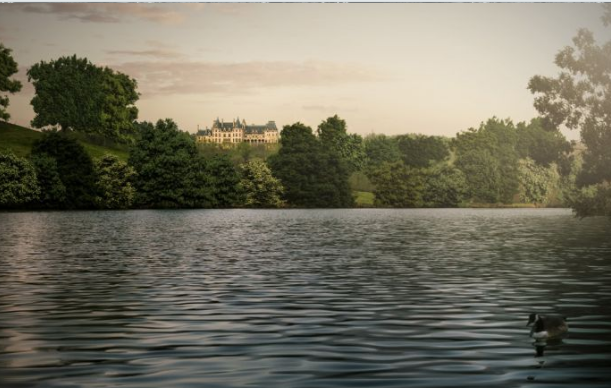 When we talk about placemaking and deliberate branding in the New South, I automatically always think of Asheville. I know Nashville and Atlanta have their own narratives, and bully for them, but Asheville started to shout its narrative to a bigger audience over forty years ago. Not content to be a sleepy gem with a mansion, Asheville tourism decided to set itself apart as a destination.
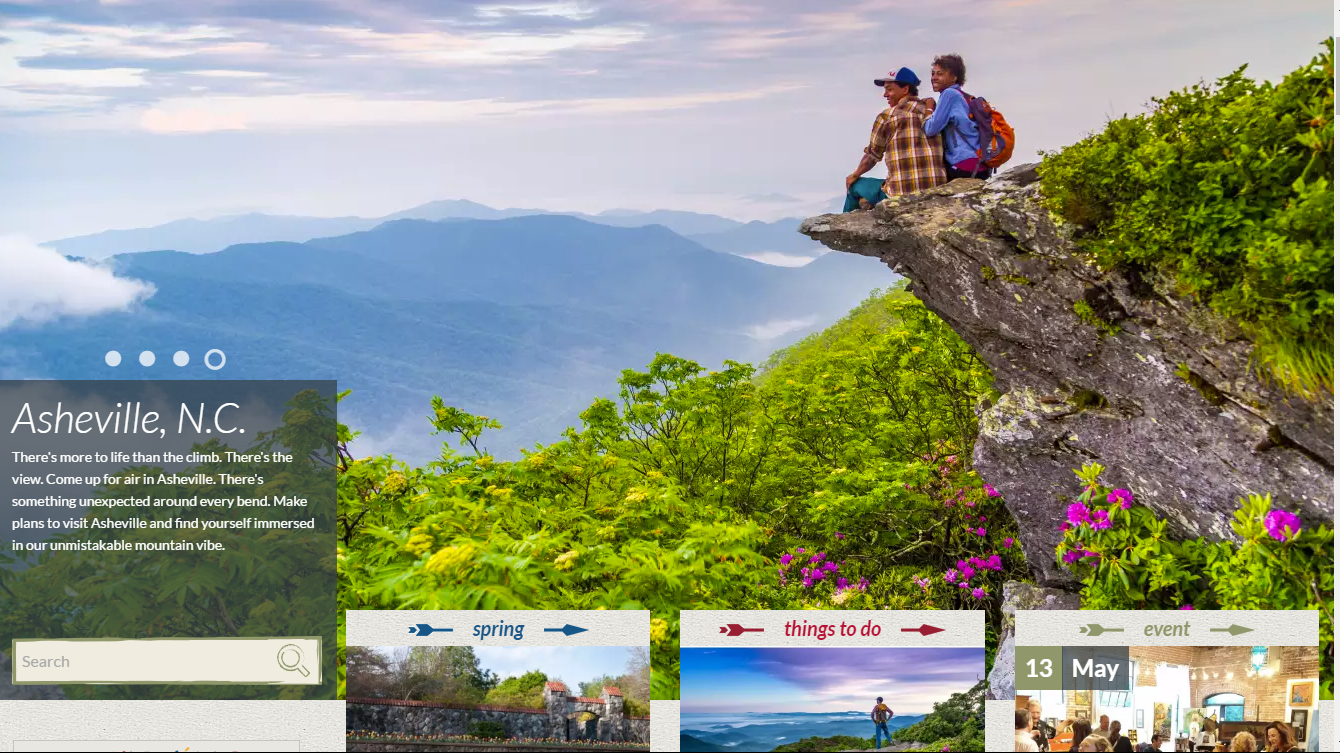
The town highlighted the mountains and the mountain traditions, elevating the idea of traditional music, turning old-way artists into artisans and highlighting hiking their particular section of the Appalachian Trail as a not-to-be-missed experience. The message and the marketing highlight what is unique and iconic about the town.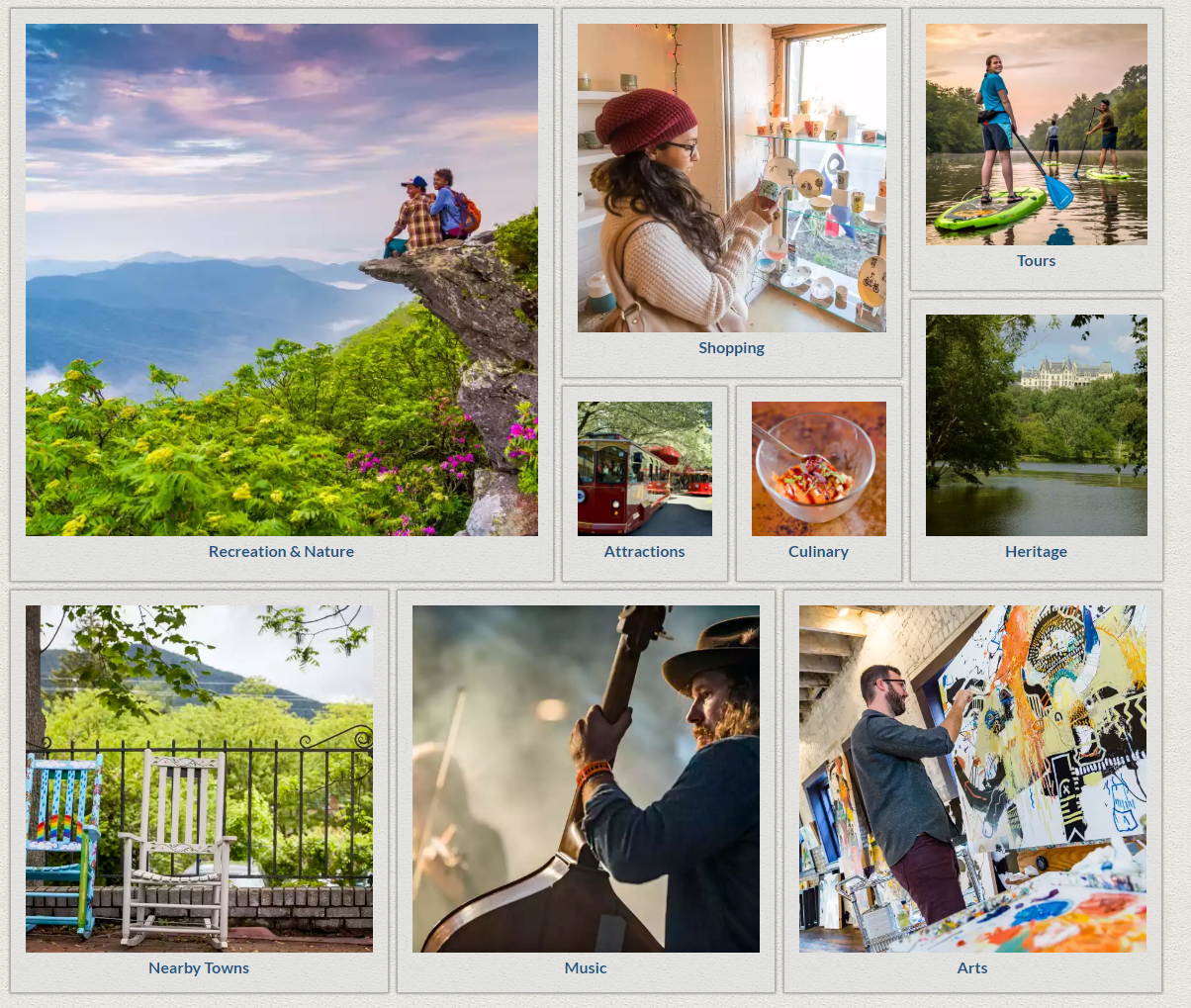
Asheville sticks with what it has, and applies the idea of Asheville to everything, indiscriminately. This brand integration allows it a wide latitude for application as Asheville keeps the conversation about its personality. Leaving the elements of activities and the place itself as window dressing, the message that We Are Interesting comes through loud and clear. With this focus on its character, Asheville is able to nimbly incorporate elements as they come and go, from music festivals to craft breweries. This is a message that is elastic enough to incorporate trends without breaking its mold. When I look at the way in which Asheville invites others to come experience the town as opposed to merely visit, I see a marked difference between this narrative and much of what seems a mad grab for additional hodgepodge entertainment elements, such as Las Vegas adding an NFL team to the list of things you can do in Vegas (and then never speak of again -- let me tell you, I’m already seeing the “What happens in Vegas stays in Vegas” football weekends and sportscaster references, each more groan-inducing than the last).
Asheville’s regeneration narrative redefined more than its town; the branding initiative undertaken by Asheville really grabbed and redefined mountain culture. Before Asheville, our national understanding of the Appalachian Mountains was unfavorable in the extreme, the butt of horribly insensitive and off-color jokes, most of which involved incest. While West Virginia is still seen in this way, Asheville has highlighted itself as so traditional as to be hip and worth the trip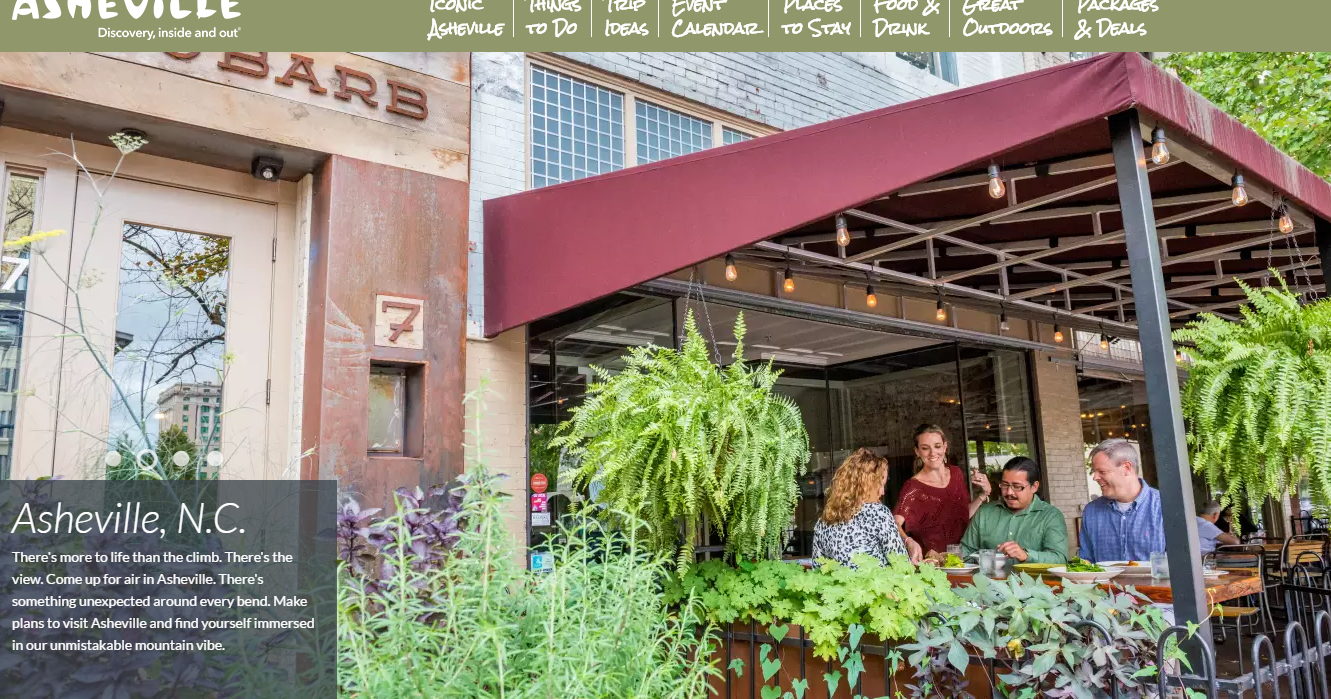
Asheville’s marketing and brand is distinctly unapologetic. It’s a town that really likes itself, and it’s okay if you don’t agree. This stance might be the biggest tether back to its roots, a foil against the critics that say that, much like Monterey, California, it is in love with itself enough that no one else needs to be, and that it has lost touch with its authenticity over years of telling us how real it is here. When I think of Asheville’s acceptance of its warts, I am reminded of the I (heart) NY ad campaign. The ultimate effort in branding a city into an icon, this campaign never said “I’m sorry” for what didn’t work about NY, and there was plenty that didn’t back then (and still doesn’t work today). Both marketing campaigns focus on the tangible good elements and shrug off the bad ones with an acceptance that almost makes us more comfortable, as though by accepting the lack of perfection in the town, we can at long last have permission to accept the lack of perfection in ourselves.
Through it all, Asheville clearly tells us that everyone here is free, white and 21. There isn’t much for the less-abled or disenfranchised, and there certainly aren’t any representations of them in the abundant marketing and tourist literature. The white creative class is more the focus for the Asheville web site than ever before. Never forget that Asheville went out of its way to add a craft brewery, decades after it had us all convinced that it had everything it needed. 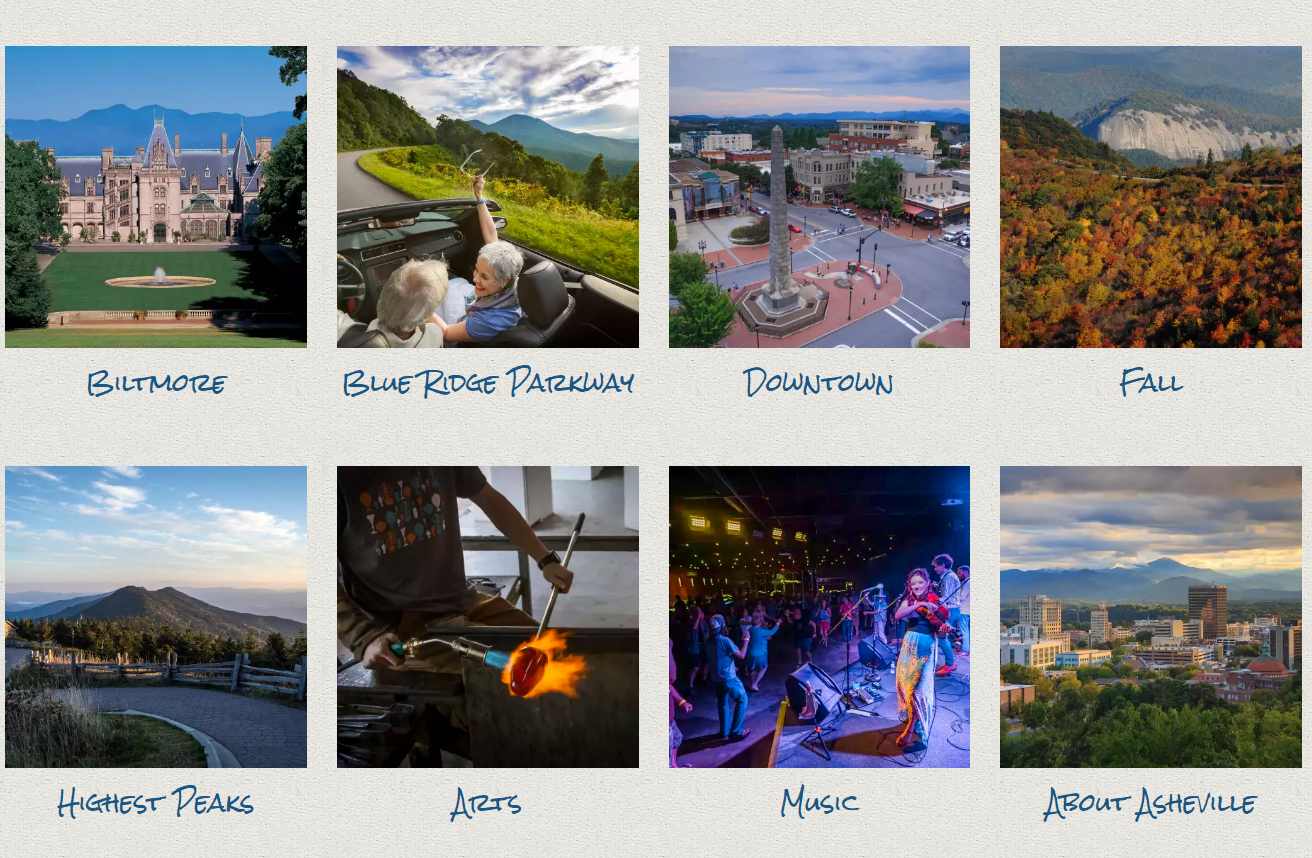
In fact, there’s a bit of desperation lurking in the wings of the stagecraft. Nonetheless, even though it might have to reboot its regeneration and update its sense of where it ranks in the New Mountain Towns index, Asheville’s branding did a lot of things well, in my opinion, whether we are selling ice cream or insurance.
see others about:
Asheville,
authenticity,
geography,
inequality,
place branding,
urban planning
Wednesday, February 8, 2017
Let Liz Speak

So must we all.
Tradition does not require compliance.
Mitch McConnel cannot silent dissent simply because he finds it offensive.
We must not kowtow to bullies.
We must #StandTogether.
#LetLizSpeak
see others about:
dissent,
equality,
inequality,
letlizspeak,
politics,
Sessions confirmation hearing,
warren,
women
Tuesday, December 29, 2015
#playlikeahero

On a list of the top 500 films of all time, ranked by box office success, only 1% of films star women of color. That’s six in 500, and the only live action movie of the six, Sister Act, was released in 1992.
Think about that: It’s been almost twenty-five years since we’ve had a top grossing live action film that was led by woman of color.
And only one film – not 1%, but just one single film – out of 500 was directed by a woman of color.
Our girls deserve action heroes with flowing hair and combat boots. Our girls deserve to see themselves onscreen as well as calling the shots behind the scenes. Our girls deserve more.
#playlikeahero
see others about:
heroes,
inequality,
movies,
women
Thursday, December 17, 2015
Saturday, November 28, 2015
All For One
And in in five weeks or so, the One Percent will have more wealth than all of the rest of humanity combined. How to know if you qualify for this elite group?
The average wealth of the global one percent is $2.7 million, but given the staggering wealth of the very wealthiest, that means that it takes much less than that to qualify.
see others about:
economy,
inequality,
One Percent
Subscribe to:
Posts (Atom)