Showing posts with label authenticity. Show all posts

Tuesday, December 22, 2020

Sister, Outsider

"I was going to die, if not sooner then later, whether or not I had ever spoken myself. My silences had not protected me. Your silence will not protect you. But for every real word spoken, for every attempt I had ever made to speak those truths for which I am still seeking, I had made contact with other women while we examined the words to fit a world in which we all believed, bridging our differences. And it was the concern and caring of all those women which gave me strength and enabled me to scrutinize the essentials of my living. 

The women who sustained me through that period were Black and white, old and young, lesbian, bisexual, and heterosexual, and we all shared a war against the tyrannies of silence. They all gave me a strength and concern without which I could not have survived intact. Within those weeks of acute fear came the knowledge - within the war we are all waging with the forces of death, subtle and otherwise. conscious or not - I am not only a casualty, I am also a warrior.

What are the words you do not yet have? What do you need to say? What are the tyrannies you swallow day by day and attempt to make your own, until you will sicken and die of them, still in silence? Perhaps for some of you here today, I am the face of one of your fears. Because I am woman, because I am Black, because I am lesbian, because I am myself - a Black woman warrior poet doing my work – come to ask you, are you doing yours?"

Sister, Outsider -- Audrey Lourde

Monday, August 10, 2020

The Hero's Deed

"Original experience has not been interpreted for you, and so you've got to work out your life for yourself. Either you can take it or you can't. You don't have to go far off the interpreted path to find yourself in very difficult situations. The courage to face the trials and to bring a whole new body of possibilities into the field of interpreted experience for other people to experience -- that is the hero's deed."
-- Joseph Campbell, The Power of Myth

Sunday, July 26, 2020

Thought of the day

“Speed is a defense against depth”

"There is more to life than increasing its speed." -- Ghandi

Tuesday, May 7, 2019

Life as a Guest House

This being human is a guest house.
Every morning a new arrival.
A joy, a depression, a meanness,
some momentary awareness comes
as an unexpected visitor.
Welcome and entertain them all!
Even if they’re a crowd of sorrows,
who violently sweep your house
empty of its furniture,
still, treat each guest honorably.
He may be clearing you out
for some new delight.
The dark thought, the shame, the malice,
meet them at the door laughing,
and invite them in.
Be grateful for whoever comes,
because each has been sent
as a guide from beyond.

---- Rumi

Monday, February 25, 2019

Vows

At lunch on Monday, my prodigal friend described me as a "mendicant Philosopher." I had to take a minute to enjoy the poetry of the image as it filled me.

He then accused me of having taken a vow of poverty. I had to correct him, though gently.

It's more a vow of authenticity, really.

Saturday, February 16, 2019

The attractive fallacy of logic and accuracy


"the logic lover . . . wishes not to understand, but to use again and again their favorite magic words, as a shield against criticism and as a weapon against others."
There is a cultural foundation to the framework that the author explored: Logic can be used as a shield against personal feelings of unworthiness because being correct is evidence of moral superiority. This cultural notion of verifiable personal worth through factual accuracy is not only wrong; those who use it are doing so as a security blanket against feelings of unlovability and a lack of self worth.

The danger of acceptance of accuracy as moral high ground is that it is itself a cover for what we really are running from: that we hold inaccuracy to be proof of immorality.

Inaccurate = Wrong = no good = worthless.

The notion of unlovability then becomes validated by the argument (or spell in this case) of accuracy used to disprove the application of unlovability. Disproving the application of worthlessness in a specific instance validates the general cultural equivalence of accuracy and worthiness.

Therefore, the more insecure someone is, the more important it can feel to be right in a single instance. As if everything hinges upon it. Because, in fact, it does.The everything" in this case is the idea that one can prove ones status as worthy of love.

When someone rejects the notion of accuracy as evidence of moral superiority, the house of cards falls, leaving adherents feeling worthless. This is when adherents often became dangerous, lashing out at any naysayers, using attacking behavior and defensiveness.

Only when we walk away from the underlying foundation of verifiable (un)worthiness can we get to the point where being wrong is an opportunity. Verification of any quality necessitates the possibility of the absence of that quality.

Worth cannot be verified, because it can't be denied - you are worthy of love and happiness. Living a life of assumed worthiness opens the door to authenticity and freedom.


Sunday, April 2, 2017

Asheville -- Even if you don't love it, it's great.

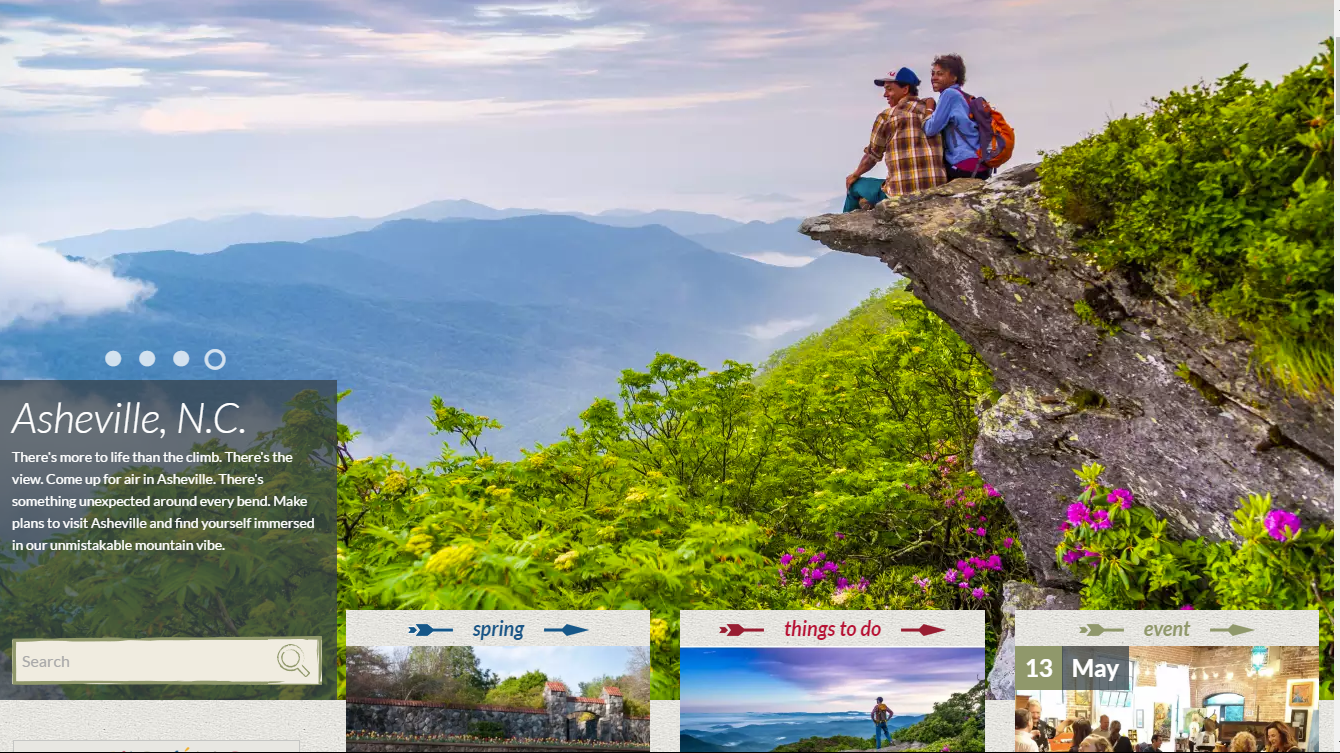
When we talk about placemaking and deliberate branding in the New South, I automatically always think of Asheville. I know Nashville and Atlanta have their own narratives, and bully for them, but Asheville started to shout its narrative to a bigger audience over forty years ago. Not content to be a sleepy gem with a mansion, Asheville tourism decided to set itself apart as a destination.
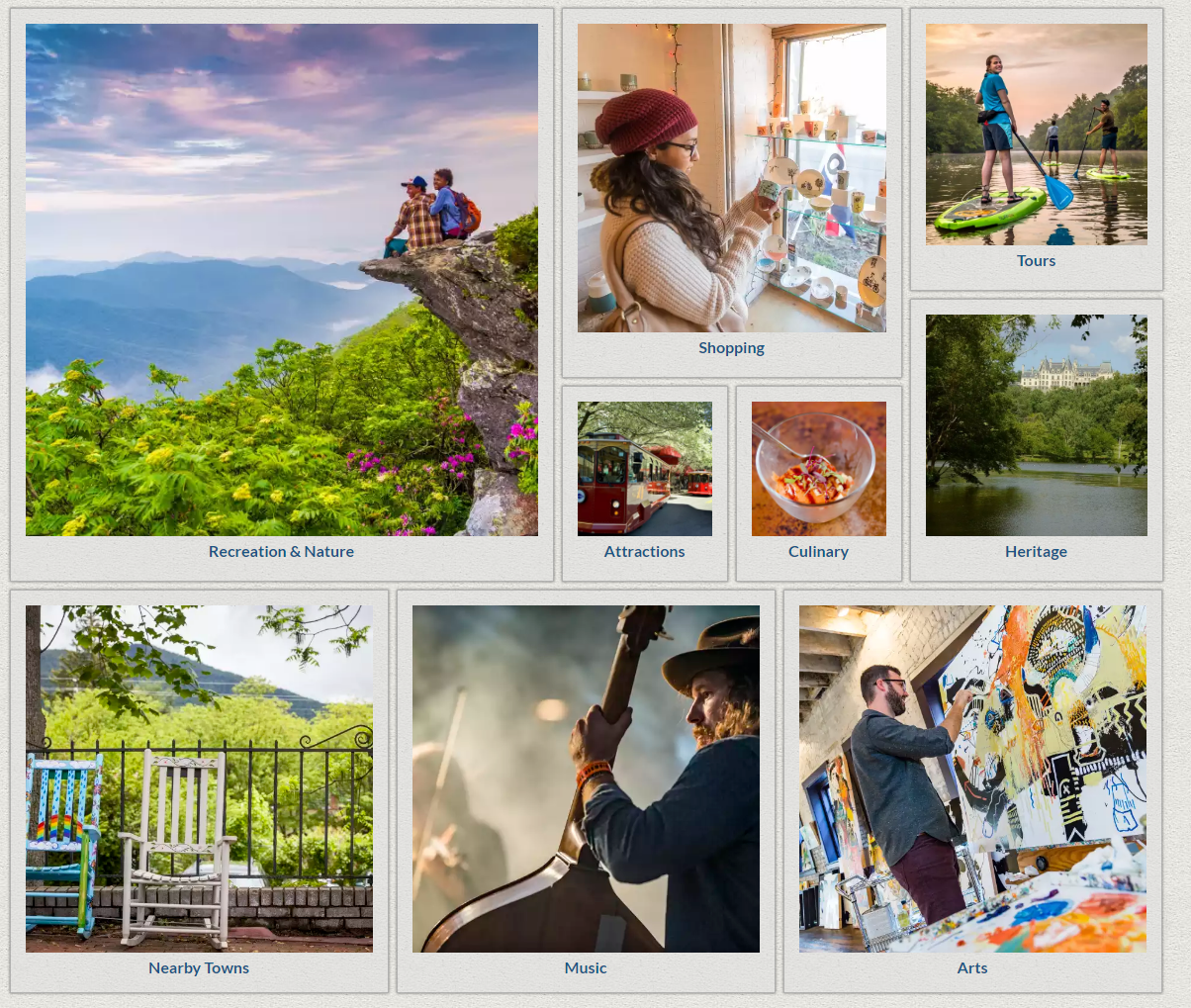
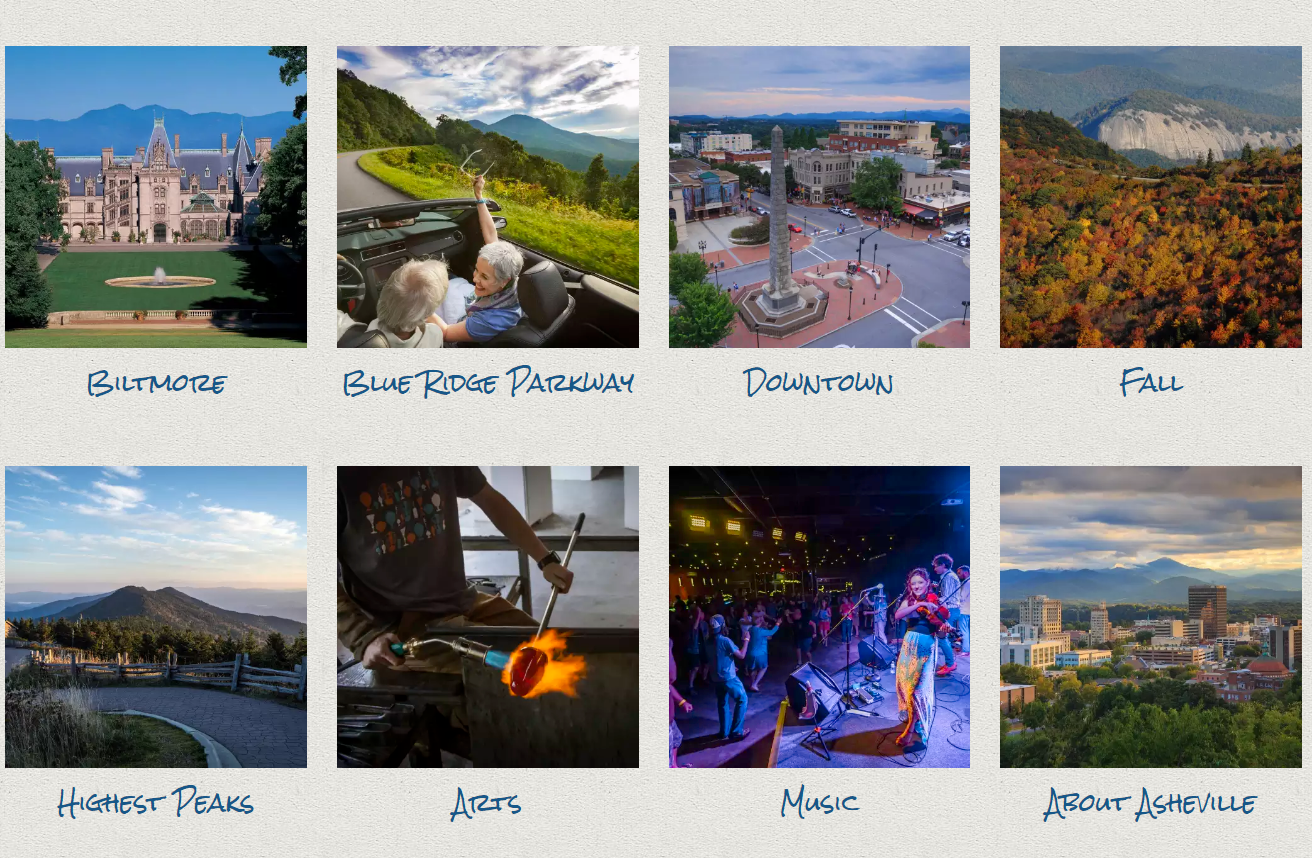
The town highlighted the mountains and the mountain traditions, elevating the idea of traditional music, turning old-way artists into artisans and highlighting hiking their particular section of the Appalachian Trail as a not-to-be-missed experience. The message and the marketing highlight what is unique and iconic about the town.
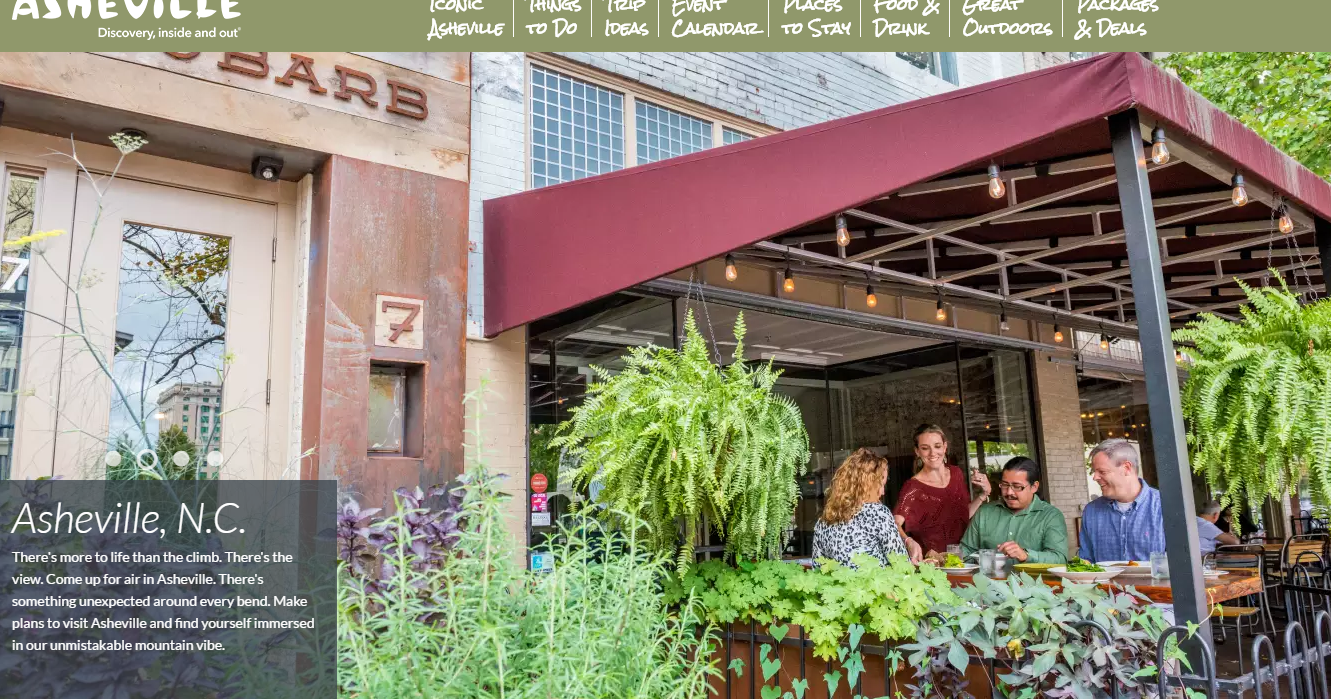
Asheville sticks with what it has, and applies the idea of Asheville to everything, indiscriminately. This brand integration allows it a wide latitude for application as  Asheville keeps the conversation about its personality. Leaving the elements of activities and the place itself as window dressing, the message that We Are Interesting comes through loud and clear. With this focus on its character, Asheville is able to nimbly incorporate elements as they come and go, from music festivals to craft breweries. This is a message that is elastic enough to incorporate trends without breaking its mold. When I look at the way in which Asheville invites others to come experience the town as opposed to merely visit, I see a marked difference between this narrative and much of what seems a mad grab for additional hodgepodge entertainment elements, such as Las Vegas adding an NFL team to the list of things you can do in Vegas (and then never speak of again -- let me tell you, I’m already seeing the “What happens in Vegas stays in Vegas” football weekends and sportscaster references, each more groan-inducing than the last).
Asheville’s regeneration narrative redefined more than its town; the branding initiative undertaken by Asheville really grabbed and redefined mountain culture. Before Asheville, our national understanding of the Appalachian Mountains was unfavorable in the extreme, the butt of horribly insensitive and off-color jokes, most of which involved incest. While West Virginia is still seen in this way, Asheville has highlighted itself as so traditional as to be hip and worth the trip
Asheville’s marketing and brand is distinctly unapologetic. It’s a town that really likes itself, and it’s okay if you don’t agree. This stance might be the biggest tether back to its roots, a foil against the critics that say that, much like Monterey, California, it is in love with itself enough that no one else needs to be, and that it has lost touch with its authenticity over years of telling us how real it is here. When I think of Asheville’s acceptance of its warts, I am reminded of the I (heart) NY ad campaign. The ultimate effort in branding a city into an icon, this campaign never said “I’m sorry” for what didn’t work about NY, and there was plenty that didn’t back then (and still doesn’t work today). Both marketing campaigns focus on the tangible good elements and shrug off the bad ones with an acceptance that almost makes us more comfortable, as though by accepting the lack of perfection in the town, we can at long last have permission to accept the lack of perfection in ourselves.
Through it all, Asheville clearly tells us that everyone here is free, white and 21. There isn’t much for the less-abled or disenfranchised, and there certainly aren’t any representations of them in the abundant marketing and tourist literature. The white creative class is more the focus for the Asheville web site than ever before. Never forget that Asheville went out of its way to add a craft brewery, decades after it had us all convinced that it had everything it needed.

In fact, there’s a bit of desperation lurking in the wings of the stagecraft. Nonetheless, even though it might have to reboot its regeneration and update its sense of where it ranks in the New Mountain Towns index, Asheville’s branding did a lot of things well, in my opinion, whether we are selling ice cream or insurance.